



Remembering the Hump, eight decades on
 Tweet
Tweet Share
Share E-mail
This year marks the 85th anniversary of the Flying Tigers' arrival in
The Flying Tigers themselves were a combat force, not the main operators of the later cargo airlift. Yet their defense of Chinese airspace and bases in 1941-42 helped create the conditions in which the Hump route could be opened and sustained after the land route was severed. Without that early protective effort, the unarmed transports that followed would have faced even greater peril. In this sense, the Tigers' arrival and the Hump airlift form linked chapters of the same story of wartime cooperation.
The pilots who flew the Hump came from many walks of American life. Some were volunteers who had already joined the
The scale remains striking. The airlift began in
Every crossing carried mortal risk. Crews flew overloaded aircraft through some of the world's most severe weather, over peaks that rose above the safe operating ceiling of many of their planes, with the constant possibility of Japanese interception. Maintenance was often rudimentary, and crews were exhausted. When the books were closed,
The Hump sustained
Many of the aircraft lost on the route still lie on remote slopes. The memory of those who flew, and of those who helped them on the ground, remains part of the shared history of the two countries.
The navigator
We are all connected to history, sometimes by only a few degrees of separation. I offer my own connection here as a small memorial.
I first heard of the Hump as a senior in high school. It did not come from a textbook. After my grandmother was killed in a car accident, we sat with her second husband, who loved her deeply. He was going through old photographs and paused at one. It showed a damaged Army transport plane from the war, a hole in the fuselage larger than a man's torso, and him standing beside it. My father asked two quiet questions. "Did you ever fly the Hump?" "Yes," he said. "It was tough." "Did you ever meet the Tigers?" He nodded and put the photograph away.
Like many men of his generation, he rarely spoke about the war. My grandmother once told me, privately, that he had been a navigator. He had flown troop and cargo transports, including missions carrying paratroopers. On one flight, his aircraft took heavy anti-aircraft fire. He was standing among a group of paratroopers when the shells struck. All of the paratroopers were killed, as was the pilot. He and the co-pilot were wounded. He helped the co-pilot keep the plane in the air long enough to land. The co-pilot died soon after they reached the ground.
His name was
The Hump dangers are recorded in the official histories: extreme altitude, severe icing, thunderstorms, primitive navigation, overloaded planes, and the knowledge that there was almost nowhere to set an aircraft down safely. More than 500 planes were lost. More than 1,300 aircrew did not return. He was one of those who did.
After the war, he took over his father's automobile business. On his daughter's 16th birthday, he gave her a new car. She was killed in an accident the same day. The loss deepened the wounds he already carried.
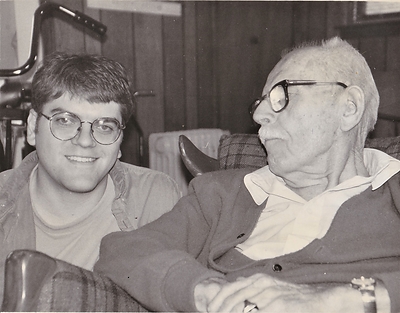
He and my grandmother later found each other. They lived for a time on
In his final years, he lived in a nursing home, kept his crew cut, and received visitors with a reserved dignity. I drove from
What remains
Eighty-five years later, the men who flew the Hump, and the Tigers like them, are gone. What they built, however, endures in more than the tonnage delivered. Americans and Chinese worked and died along the same route. Chinese villagers risked their lives to save downed airmen. The wreckage still marks the mountains — the
We remember the more than 1,300 who never came home. We remember those who returned carrying invisible injuries: the damaged hearing, the sudden startle, the private weight that never fully lifted. Men like
Their sacrifice was not for conquest. It was made in the belief that fascism had to be opposed and that allies should stand together. That belief remains relevant. The cooperation forged in those years was imperfect, as all human cooperation is. Yet it was real. It was paid for in lives. It deserves to be remembered not as nostalgia, but as evidence of what is possible when two peoples choose solidarity over suspicion.
The aluminum still glints on distant slopes. The ashes of one life rest at the bottom of a
Remembering the Hump, eight decades on
https://en.chinadiplomacy.org.cn/2026-08/19/content_118654893.shtml
 View original content to download multimedia:https://www.prnewswire.com/news-releases/remembering-the-hump-eight-decades-on-302855818.html
SOURCE chinadiplomacy.org.cn
Serious News for Serious Traders! Try StreetInsider.com Premium Free!
You May Also Be Interested In
- Payward and Singapore Gulf Bank Partner to Bring 24/7 Settlement to Institutional Digital Asset Markets
- The General Insurance® Gives Street Fighter's Iconic Beat-Up Car a Break
- Latitude Air Ambulance Statement on Heartbeat 104 Medevac
Create E-mail Alert Related Categories
PRNewswire, Press ReleasesSign up for StreetInsider Free!
Receive full access to all new and archived articles, unlimited portfolio tracking, e-mail alerts, custom newswires and RSS feeds - and more!
