



Does your immune system learn like AI?
 Tweet
Tweet Share
Share E-mail
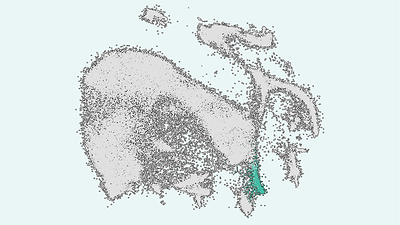
In the thymus, the immune system's T cells are trained to avoid attacking healthy tissue via a process called negative selection. There, T cells are tested on whether they bind to fragments of the body's own proteins, called self-peptides. Those that do are immediately deleted. However, each T cell encounters only a small fraction of the enormous number of self-peptides abounding throughout the body. So, how does the immune system learn to tolerate the rest?
"This has long been an open question in immunology," explains CSHL Assistant Professor
To anyone who's worked in tech during the last 10 or so years, that word should ring a bell. "Machine learning deals with the generalization problem all the time," CSHL Associate Professor
Meyer, Navlakha, and their team found that the immune system fulfills two key conditions necessary to learn through generalization. First, the abundance of self-peptides in the thymus closely mirrors their abundance in tissues throughout the body. In machine learning terms, the training data resemble the test data. Second, T-cell receptors are cross-reactive, meaning a single receptor can recognize several similar peptides, allowing the T cell to learn about peptides it never directly encounters.
The study shows that through this process, 90% of self-reactive T cells can be correctly deleted in the thymus despite each one encountering only 10% of the body's self-peptides. Thus, the team's research suggests our immune system accomplishes the impressive feat of negative selection through a biological kind of "generalization."
To take their findings one important step further, the team asked whether failures of this generalization process could help explain autoimmunity—when the immune system wrongly attacks healthy tissue. Remarkably, the team's AI model accurately reproduced features of autoimmune polyendocrine syndrome type 1, a rare autoimmune disease.
"We're calling this direction ImmunoAI," Navlakha says. "We're not trying to create AI inspired by the immune system, but we're studying how the immune system solves fundamental machine learning problems. When we start to look at the immune system as if it's another kind of AI, we may find out some surprising things about human health and disease."
About Cold Spring Harbor Laboratory
Cold Spring Harbor Laboratory is one of the world's most renowned institutions for biomedical research and education. Founded in 1890 and located on the North Shore of Long Island, the 501(c)(3) nonprofit inspires curiosity, discovery, and innovation across the life sciences. For more information, visit www.cshl.edu.

 View original content to download multimedia:https://www.prnewswire.com/news-releases/does-your-immune-system-learn-like-ai-302855768.html
SOURCE Cold Spring Harbor Laboratory
Serious News for Serious Traders! Try StreetInsider.com Premium Free!
You May Also Be Interested In
- Alexy Metals Named to 2026 Inc. 5000 List of America's Fastest-Growing Private Companies
- "Future Resonance -- ShanghaiEye Night" Brings Shanghai to Washington, Fosters People-to-People Exchange Across the Pacific
- Blokees Debuts 90+ New Products at Wonder Festival Shanghai 2026
Create E-mail Alert Related Categories
PRNewswire, Press ReleasesSign up for StreetInsider Free!
Receive full access to all new and archived articles, unlimited portfolio tracking, e-mail alerts, custom newswires and RSS feeds - and more!
