




Atomic Minerals Detects Radon Along Faults at Lisbon Valley

FREE Breaking News Alerts from StreetInsider.com!
StreetInsider.com Top Tickers, 10/14/2026
- S&P 500, Dow futures inch up before inflation data; bank results in focus
- Oil prices surge as Iran deploys new tactics to target tankers
- Bank of America stock falls on earnings miss
- BlackRock earnings beat sends shares higher premarket
- ASML shares climb on raised 2026 outlook, capacity expansion plans
 Tweet
Tweet Share
Share E-mail
Get Alerts ATOM Hot Sheet
Join SI Premium – FREE
Vancouver, British Columbia--(Newsfile Corp. - October 14, 2026) - Atomic Minerals Corporation(TSXV: ATOM) (OTCQB: ATMMF) (FSE: DO8)("Atomic Minerals" or the "Company") announces the results of a radon cup survey at its 1,516.5 acre (614 hectare) South Lisbon Valley East property ("SLVE") located within the Colorado Plateau uranium district, approximately 35 kilometres NE of Monticello, Utah.
The survey was designed to detect elevated radon gas emanating from the base of the Moss Back Member of the Triassic Chinle Formation. Survey highlights:
- The radon survey found elevated radon counts to the southwest on all five survey lines, associated with a mapped fault acting as a conduit for sources at depth.
- The radon survey found elevated radon counts to the northeast on Lines 1 through 3, again associated with a mapped fault acting as a conduit for sources at depth.
- The radon results from the southeastern-most line, significantly lower in elevations (75-100 metres), produced relatively higher radon values than the other four lines, reflecting either jointing perpendicular to the northwest-southeast trending fault or the significant decrease in elevation bringing the potential source closer to surface.
- Spot anomalies in the middle of some of the lines may point toward a source higher in the stratigraphic section, likely the Morrison formation.
"The radon cup survey successfully located elevated counts along known faults, strongly supporting sources at depth, adding to our geological database and geological model, as we continue to de-risk our upcoming Lisbon Valley East drill program," commented Atomic Minerals' CEO Clive Massey. "Our drilling permit has been approved and only requires posting of the bond to allow us to commence drilling as we chase a NE analog to the previously producing uranium belt to the SE of the Lisbon Valley Fault, where 78 million lbs. was previously produced" he continued.
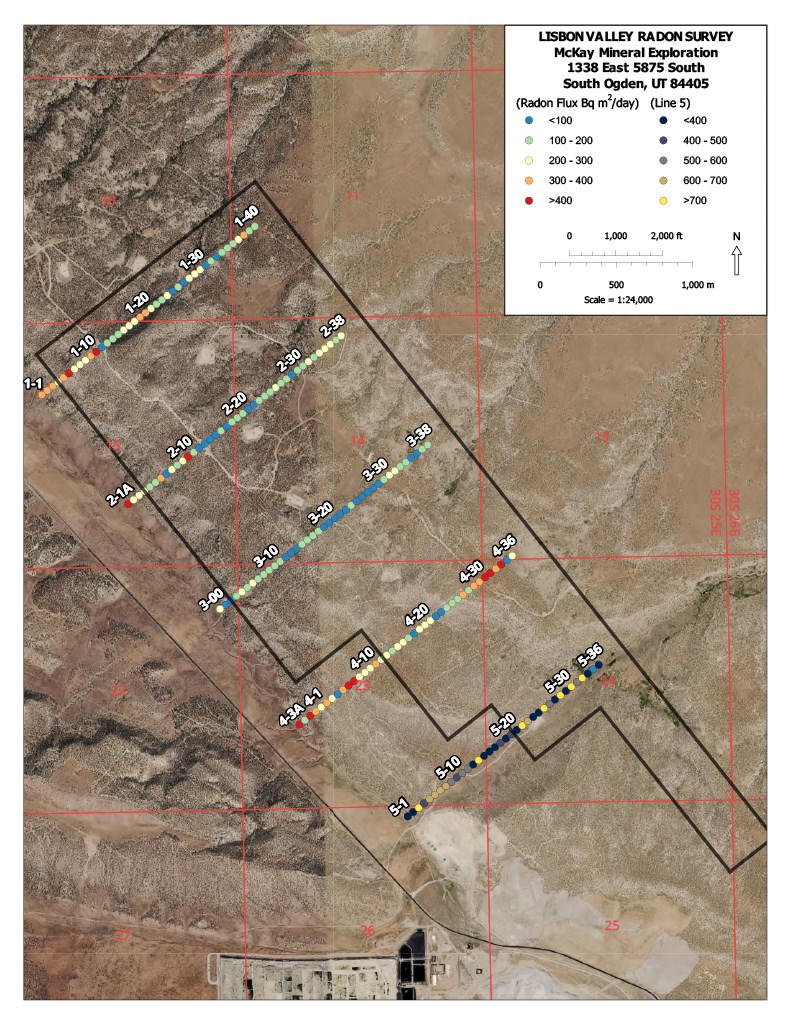
Figure 1. South Lisbon Valley East Radon Survey Results
To view an enhanced version of this graphic, please visit:
https://images.newsfilecorp.com/files/10252/318861_b3c5b88644706a51_002full.jpg
"Atomic Minerals also owns three additional Chinle projects in the Colorado Plateau. Harts Point, lying to the northeast of Lisbon Valley, where 2024 drilling by previous joint venture partner Kraken Energy confirmed elevated gamma ray counts in the Moss Back Member, is approved for drilling subject to bonding. Ten Mile lies northwest of Moab and hosts elevated gamma ray readings in the Moss Back Member in historic oil and gas drill holes. Dolores, the site of historic drilling by Hunt Oil and Newmont, lies along trend from Lisbon Valley over the state line in Colorado, again hosting elevated gamma ray readings in the Moss Back Member," Mr. Massey concluded.
Radon Survey Parameters
The survey was completed by Stephen McKay of McKay Mineral Exploration, LLC. Of South Ogden, Utah. The description of the survey is taken directly from his report, with metric measurements added.
Five equally spaced lines at 1/2 mile (817m) intervals along the length of the property were sampled at 150 foot (45.7m) intervals across the full width of the property. Radon measurements were collected using the E-perm system which consists of an Electret (the device that measures the Radon), S-chamber (ion chamber) that holds the electret while it is measuring the radon, and the SPER-1 Reader which reads the electret after data collection is completed.
20 detectors were deployed each day. This included setting the Ion chamber into the ground and then screwing the electret (the radon detector) into the chamber. Each detector was placed at 150-foot (45.7m) intervals along the sample line. Each electret starts off with an initial voltage (surface potential). The initial voltage of the electret is measured before it is placed in the field and then it is measured at the end of each day. The detector is in the field from 6-8 hours. As the electret ion chamber is exposed to radon, the surface voltage is reduced on the electret. This reduction in surface voltage is a measure of the time-generated concentration of radon with-in the environment. Sample points were downloaded into a Garmin 64sr GPS unit and were used to locate the sample sites. At the end of each day each electret's voltage was measured and the difference in voltage from the beginning of the day was calculated and entered into a program to process each reading.
Colorado Plateau and Lisbon Valley Uranium
The roughly 130,000 square mile (336,700 square kilometre) Colorado Plateau, hosts the largest uranium province in the USA and one of the largest in the world, having previously produced 597 million pounds to date. Most of the Colorado Plateau uranium deposits are hosted in the Triassic Chinle and Jurassic Morrison Formations that formed in mostly arid environments. These deposits are exposed today along cliffs and drainages that transect the Plateau and have been mined for vanadium since 1909 and for uranium since 1946. The two main areas of uranium production were Morrison Formation Grants Mineral Belt in New Mexico and the Chinle Formation Lisbon Valley in Utah.1
The Chinle Formation deposits are located in arcuate belts associated with a series of NW-SE trending anticlines developed as a result of salt movement in the underlying strata within the Paradox Basin. Paleo rivers flowed along each side of these anticlines with uranium mineralization found within these paleo-channels along the lengths of the anticlines. Lisbon Valley is the type location for Chinle deposits.
Lisbon Valley produced approximately 78 million pounds of U3O8 between 1952 and 1982 from an arcuate belt some 16 miles long by 1 mile wide with approximately 1/3 of the belt eroded away post mineral. Individual ore bodies ranged from a few hundred pounds to 20,000,000 pounds of U3O8, hosted in the basal Moss Back member of the Triassic Chinle formation along the southwest flank of the Lisbon Valley anticline. A northwest trending, post-mineral normal fault, the Lisbon Valley Fault abruptly cut-off and displaced the uranium mineralization associated with the northeast flank, speculatively dropping it + 2500 feet on the northeast side of the fault.2
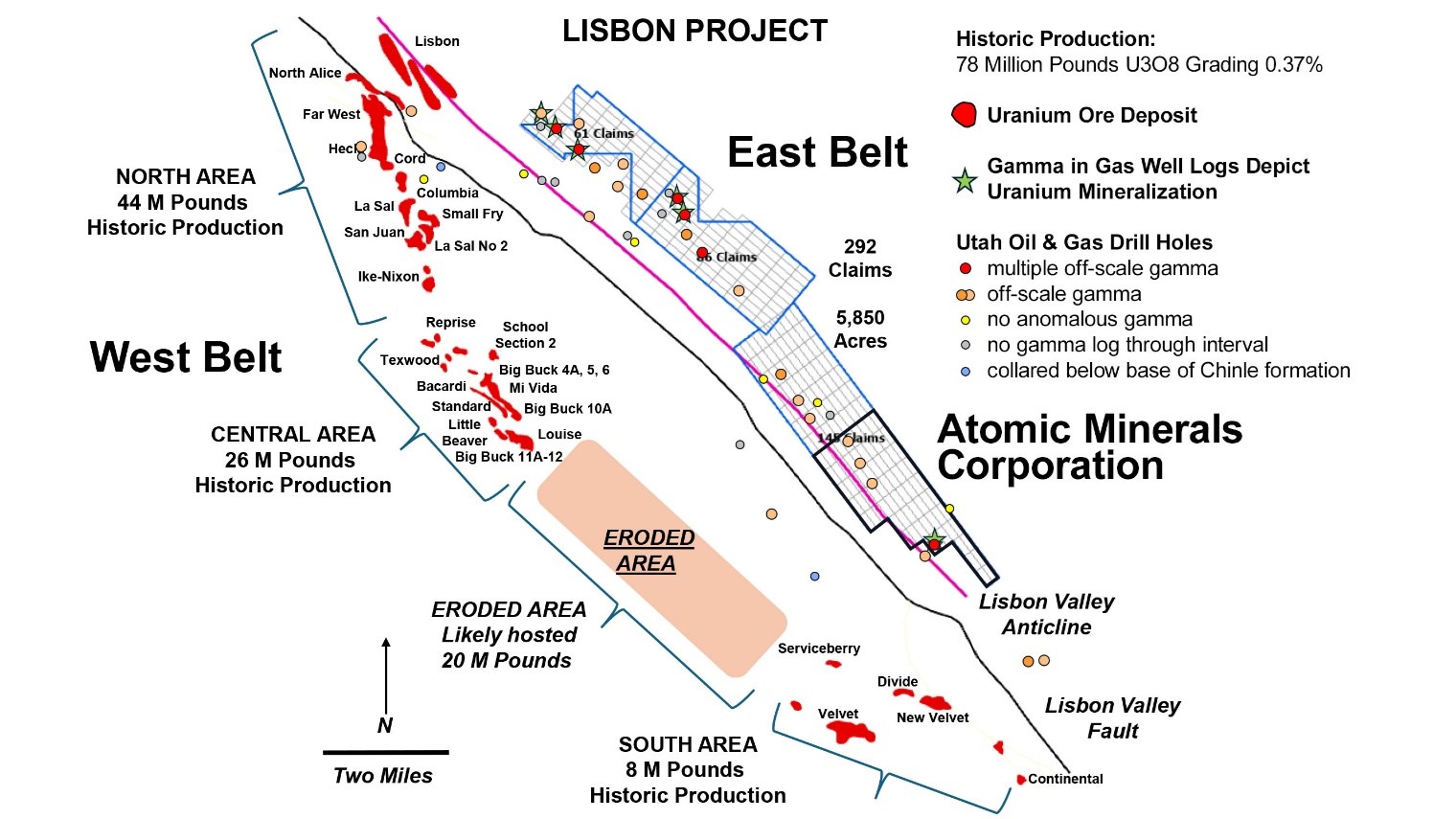
Figure 2. Lisbon Valley Historic Production
To view an enhanced version of this graphic, please visit:
https://images.newsfilecorp.com/files/10252/318861_b3c5b88644706a51_003full.jpg
The Rio Algom mine produced 13 million pounds at an average grade of 0.25% U3O8 at a depth 2550 feet on the downfaulted side of the fault, supporting the presence of an arcuate belt on the northeast side of the fault2. Oil and gas drilling, largely between 2006 and 2014, on the northeast down-faulted side of the Lisbon Valley anticline located anomalous to extremely anomalous gamma ray readings in the suspected Moss Back Member in 28 of 51 holes drilled throughout a northwest trending belt 20 kilometres in length by + 750 metres in width, outlining the suspected eastern arcuate belt.
Within Atomic Minerals' SLVE property nine widely-spaced historic oil and gas wells appear to define the southern end of this 20km by +750m belt as 'off-scale' radioactivity was recorded within the favorable Chinle Formation host rock over widths of 1.8 to 4.5 m (6 to 15 feet) from depths of 760 to 880 m (2,495 to 2,890 feet).3
Sources of Information:
- Hall, S.M., Van Gosen, B.S. and Zielinski, R.A. (2023). Sandstone-Hosted Uranium Deposits of the Colorado Plateau, USA. Ore Geology Reviews Volume 155. 39p. https://doi.org/10.1016/j.oregeorev.2023.105353
- Chenoweth, W.L. (1990). Lisbon Valley, Utah's Premier Uranium Area, a Summary of Exploration and Ore Production. Utah Geological Survey Open File Report 188, July 1990.
- Utah Division of Oil, Gas and Mining Drill Hole Database API#'s 4303716221, 4303720318, 4303731848, 4303731850, 4303731859, 4303731860, 4303731883, 4303731891, and 4303750041
The data disclosed in this news release relates to historical drilling. Atomic Minerals has not undertaken any independent investigation of the sampling, nor has it independently analyzed the results of the historical exploration work in order to verify the results. Atomic Minerals considers these historical drill results relevant as the Company will use this data as a guide to plan exploration programs. The Company's current and future exploration work includes verification of the historical data through drilling.
R. Tim Henneberry, PGeo (BC) and an advisor to Atomic Minerals, and a Qualified Person under National Instrument 43-101 has reviewed and approved the technical content of the news release.
About Atomic Minerals Corporation
Atomic Minerals Corporation is a publicly listed exploration company on the TSXV, trading under the symbol ATOM, led by a highly skilled management and technical team with a proven track record in the junior mining sector. Atomic Minerals' objective is to identify exploration opportunities in regions that have been previously overlooked but are geologically similar to those with previous uranium discoveries. These underexplored areas hold immense potential and are in stable geopolitical and economic environments.
Currently, the Company's property portfolio contains Uranium projects with significant technical merit in three locations known for hosting Uranium production in the past. We have four on the Colorado Plateau, within the continental United States. The plateau has previously produced 597 million pounds of U3O8. The other two recently acquired properties are located in the prolific Athabasca region in Saskatchewan, Canada and the Mount Laurier property located in Quebec, Canada.
For additional information about the Company and its projects, please visit our website at www.atomicminerals.ca
ON BEHALF OF THE BOARD OF DIRECTORS
"Clive Massey"
Clive H. Massey
President & CEO
For further information, please contact:
Investor Relations, Jim Romano
Tel: (778) 898-7917
Neither TSX Venture Exchange nor their Regulation Services Provider (as that term is defined in the policies of the TSX Venture Exchange) accepts responsibility for the adequacy or accuracy of this release.
Forward-Looking Statements:
This news release contains certain statements that may be deemed "forward-looking" statements. Forward looking statements are statements that are not historical facts and are generally, but not always, identified by the words "expects", "plans", "anticipates", "believes", "intends", "estimates", "projects", "potential" and similar expressions, or that events or conditions "will", "would", "may", "could" or "should" occur. Although the Company believes the expectations expressed in such forward-looking statements are based on reasonable assumptions, such statements are not guarantees of future performance and actual results may differ materially from those in forward looking statements. Forward-looking statements are based on the beliefs, estimates and opinions of the Company's management on the date the statements are made. Except as required by law, the Company undertakes no obligation to update these forward-looking statements in the event that management's beliefs, estimates or opinions, or other factors, should change.

To view the source version of this press release, please visit https://www.newsfilecorp.com/release/318861
Serious News for Serious Traders! Try StreetInsider.com Premium Free!
You May Also Be Interested In
- Matador (MTDR) PT Raised to $65 at Truist Securities; 'Strong Execution to Continue'
- CleanTech Vanadium Reports up to 12.9 g/t Gold in Quartz Surface Samples and Presents a Conceptual Starter Pit at Its El Triunfo Gold Project in Bolivia
- SealSQ to show two quantum-resistant chips and ASIC concept at electronica 2026
Create E-mail Alert Related Categories
Newsfile, Press ReleasesRelated Entities
Maynard Um, Mark Zuckerberg, ARKSign up for StreetInsider Free!
Receive full access to all new and archived articles, unlimited portfolio tracking, e-mail alerts, custom newswires and RSS feeds - and more!
