




Traditional vs. Digital Measuring Tools: What Homeowners Need

FREE Breaking News Alerts from StreetInsider.com!
StreetInsider.com Top Tickers, 10/10/2026
- Wall Street posts weekly gains with earnings, inflation data on tap
- Oil prices settle higher as more production shut ahead of hurricane
- Apple cuts iPhone 18 Pro orders due to soft demand, Nikkei Asia reports
- UBS flags level in gold prices where dip buyers will likely emerge
- Telecom stocks tumble on SpaceX spectrum acquisition news
 Tweet
Tweet Share
Share E-mail
You measured twice, cut once, and the shelf still doesn’t fit. The gap between the bookcase and the wall mocks you, a quarter-inch reminder that your trusty tape measure and a hurried glance weren’t quite enough. It’s a frustrating scenario nearly every homeowner has faced during a weekend project, and it raises an important question: is it time to move beyond traditional measuring tools, or do the classics still deserve their place in your toolbox?
Measuring technology has evolved dramatically in recent years. Laser distance measures, digital rulers, and smart levels now sit alongside the familiar tape measures and carpenter’s squares at hardware stores, promising pinpoint accuracy with minimal effort. But are these digital options truly necessary for the average homeowner, or are they expensive gadgets collecting dust in a drawer? This article cuts through the noise to help you make an informed choice. Whether you’re planning a kitchen renovation, assembling flat-pack furniture, or simply hanging a gallery wall, understanding when traditional tools suffice and when digital precision measurement makes the difference will save you time, money, and a few choice words muttered under your breath.
The Foundation: Understanding Traditional Measuring Tools
Traditional measuring tools fall into four core categories that most homeowners already own. The tape measure handles linear distances, the ruler or straightedge provides a firm reference for marking, the spirit level confirms horizontal and vertical alignment, and the carpenter’s square ensures right angles during layout and assembly. Together, these tools have built houses, hung doors, and tiled bathrooms for generations.
Their advantages are undeniable. They cost very little, require no batteries or calibration software, and virtually everyone knows how to use them on a basic level. When you need to check whether a picture frame is straight or mark a quick cut line on a piece of trim, grabbing a tape measure and pencil is instinctive and immediate. For simple, short-range tasks, these tools remain perfectly effective.
However, traditional tools carry inherent limitations that compound as projects grow in complexity. Parallax error—the slight misreading caused by viewing a measurement scale at an angle—introduces inaccuracies that most users never notice until a cut comes up short. Transcription mistakes happen when you jot down numbers in a rush or try to remember a figure while walking to the saw. Measuring a room solo with a flexible tape that bows or slips off the far wall turns a thirty-second task into a five-minute wrestling match, and the result is often unreliable. Perhaps most critically, traditional tools offer no data memory; every measurement lives only as long as your handwriting on a scrap of lumber. For homeowners who need consistent accuracy across multiple cuts or want to compare dimensions later, these pain points add up to wasted materials and repeated trips to the hardware store.
The Digital Revolution: An Overview of Modern Measuring Tools
Digital measuring tools emerged as a direct response to the frustrations that traditional instruments leave unresolved. Rather than relying on your eye to interpret tiny hash marks on a metal blade, these devices convert physical distances and angles into clear numerical readouts, effectively removing human reading error from the equation.
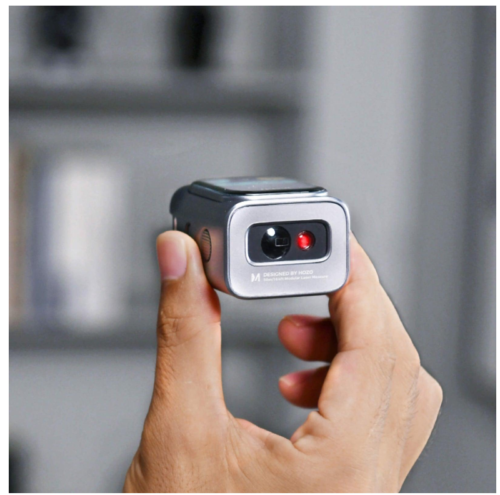
The category breaks down into several practical groups. Laser distance measures emit a focused beam of light and calculate the time it takes to bounce back from a surface, delivering room-length measurements in under a second with remarkable consistency. Digital calipers and micrometers serve a different scale entirely, letting you measure thicknesses, diameters, and depths down to fractions of a millimeter—ideal when matching hardware or verifying material dimensions. Digital levels and inclinometers replace the bubble vial with an electronic sensor that displays exact degree readings, eliminating the guesswork of deciding whether a bubble is truly centered. Finally, smart tape measures and digital rulers blend familiar form factors with electronic displays, automatically recording figures and sometimes transmitting them to a phone app.
The unifying principle behind all these tools is digital precision measurement: a sensor captures the physical reality, software processes it, and a screen presents an unambiguous number. There’s no parallax, no squinting, and no mental arithmetic required at the moment of capture. For homeowners, this means the gap between intention and execution shrinks considerably, turning measurements into reliable data rather than hopeful estimates.
Head-to-Head Comparison: Which Tool Wins for Your Project?
Accuracy and Precision: The Data Doesn’t Lie
A standard tape measure typically delivers accuracy within ±1/16 of an inch under ideal conditions—meaning the tape is held taut, read straight-on, and the hook isn’t worn. In practice, most homeowners achieve something closer to ±1/8 inch once real-world variables creep in. A laser distance measure, by contrast, routinely hits ±1/32 inch or better across distances up to hundreds of feet. That difference might sound trivial until you’re cutting countertop material where an extra sixteenth means a visible gap against the wall, or installing cabinet doors that need to align within a millimeter. Precision measurement at the digital level turns “close enough” into genuinely correct, reducing the costly cycle of re-cutting, returning materials, and second-guessing your work.
Speed and Solo Operation Efficiency
Measuring a room with a tape measure typically requires a helper holding one end or a series of awkward maneuvers—hooking the tab on a door frame, pressing the tape into a corner while it bows under its own weight, then shuffling to read the far end. A laser measure eliminates the second pair of hands entirely. You place the device against one wall, point it at the opposite surface, and press a button. The reading appears in under two seconds. Multiply that advantage across every wall, doorway, and window in a remodel, and you save not just minutes but the mental fatigue of repeated physical effort. Solo operation also means you can measure at odd hours or in tight spaces—inside closets, above ceilings, between appliances—without coordinating schedules with a reluctant volunteer.
Functionality and Advanced Features
Digital tools do more than display a single number. Most laser measures calculate area and volume automatically once you capture length, width, and height, saving you from scribbling multiplication on drywall scraps. Indirect measurement modes use the Pythagorean theorem internally, letting you determine heights you can’t physically reach—like a roofline or stairwell—by taking two accessible shots. Bluetooth connectivity sends readings directly to phone apps or spreadsheet software, creating a permanent digital record you can reference weeks later when ordering materials online. Continuous measurement mode updates the display in real time as you move the device, perfect for positioning furniture or finding the midpoint of a wall without marking and dividing. Traditional tools offer none of these capabilities; every calculation, every record, and every derived measurement depends entirely on your arithmetic and your notebook.
Cost and Learning Curve Analysis
Digital measuring tools do carry a higher upfront cost than their traditional counterparts. A reliable tape measure costs a fraction of what a decent laser distance measure demands. However, framing the investment purely as a purchase price ignores the downstream savings. A single mismeasured sheet of plywood or an incorrectly ordered length of granite countertop can exceed the cost of a laser measure several times over. When you factor in wasted materials, repeated trips to the store, and the value of your own time, the digital tool often pays for itself within one or two medium-scale projects. As for the learning curve, basic operation—point and click—requires almost no instruction. Advanced features like indirect measurement or Bluetooth pairing take a few minutes of experimentation, far less effort than mastering the traditional skill of reading fractional increments on a tape or achieving consistent results with a plumb bob over long vertical distances.
Practical Solutions: Matching the Tool to Common Homeowner Tasks
Quick, Small Jobs (Hanging pictures, checking shelf level)
When you’re positioning a picture frame, verifying that a shelf bracket is straight, or marking a single cut on a piece of trim, traditional tools remain the fastest path from thought to action. A spirit level pulled from a drawer gives you an immediate answer without powering anything on, and a tape measure handles the short distances involved with more than enough accuracy. For tasks that take under five minutes and involve measurements shorter than a few feet, the overhead of retrieving and activating a digital device simply isn’t justified. Keep a small torpedo level and a sixteen-foot tape in an accessible spot—these two tools handle ninety percent of everyday household checks.
Room Remodels & Flooring Projects
Once a project scales to full-room dimensions, a laser distance measure becomes essential rather than optional. Calculating square footage for flooring materials, confirming that opposite walls are equal length before ordering cabinets, or verifying ceiling height for crown molding all demand consistent accuracy across distances where a tape measure introduces cumulative error. Point the laser at each wall, let the device compute area automatically, and transfer the figures to a phone app or spreadsheet. This workflow eliminates the arithmetic mistakes that lead to ordering two boxes too few of hardwood planks or discovering mid-install that your laminate run is three inches short. Pair the laser with a traditional square to confirm corners are true before committing to your layout lines.
Building Furniture & Cabinetry
Custom furniture and cabinetry demand a hybrid approach. A digital caliper lets you verify dowel diameters, drill bit sizing, and material thickness with sub-millimeter certainty—critical when joints must mate flush. A laser measure confirms overall carcass dimensions and ensures the finished piece will fit its intended space. During assembly, however, a reliable carpenter’s square and spirit level remain indispensable for checking that frames are racked true and surfaces sit plumb. This combination of digital precision for planning and traditional tools for hands-on assembly reflects the broader trend toward integrated design workflows, with brands like HOZO developing user-centered digital tools that bridge the gap between measurement and creation for detail-oriented makers.
Outdoor Projects (Decking, Fencing)
Outdoor work introduces longer distances, uneven terrain, and bright sunlight—conditions that challenge both traditional and digital tools differently. A laser measure with extended range and a target plate accessory lets you establish fence-line lengths or deck perimeters quickly, even when direct sunlight washes out the laser dot at distance. Use it to set post spacing consistently and to square large rectangular layouts by comparing diagonal measurements. A traditional tape still earns its keep for quick material checks at the saw station—confirming board lengths, marking rip widths, and verifying joist spacing during installation. The practical solution outdoors is carrying both: the laser for layout and planning, the tape for cut-by-cut execution at the workbench.
Making the Informed Choice: Your Guide to Selecting Measuring Tools
Before spending money on any new tool, ask yourself three questions. First, how often do you tackle projects that involve measuring? If you’re renovating a room every few months or building furniture regularly, digital tools will repay their cost quickly through saved time and reduced material waste. If your measuring needs rarely extend beyond hanging a mirror once a year, a quality tape measure and level will serve you well indefinitely. Second, what’s your realistic budget—not just for the tool itself, but for the mistakes you’re currently making without it? A single botched countertop cut or an incorrectly ordered set of blinds often costs more than the digital device that would have prevented the error. Third, do you need your measurements to travel beyond the moment of capture? If you’re ordering materials online, collaborating with a contractor, or planning across multiple sessions, Bluetooth data transfer and stored measurement histories become genuinely useful rather than gimmicky.
For most homeowners, the ideal starter kit includes three items: a quality retractable tape measure for quick grabs and short-distance marking, a basic laser distance measure for room-scale accuracy and solo operation, and a reliable spirit level for alignment checks. This trio covers everything from hanging curtain rods to calculating paint coverage. If you find yourself taking on more ambitious work—custom shelving, bathroom remodels, deck construction—consider upgrading to a feature-rich laser with indirect measurement capability and adding a digital angle finder for compound cuts and sloped surfaces. The key is building your toolkit incrementally, letting each project’s demands guide your next investment rather than buying everything at once.
Building the Right Toolkit for Every Home Project
The choice between traditional and digital measuring tools isn’t an either-or decision—it’s about building a toolkit that matches the way you actually work. A tape measure and spirit level will always earn their place for the quick, instinctive tasks that fill everyday homeownership: checking a gap, marking a board, confirming a frame is straight. These tools are immediate, reliable, and require nothing more than your hands and eyes.
Digital tools earn their place differently. They deliver precision measurement where accuracy truly matters, enable solo operation across room-scale distances, and handle the math that leads to expensive mistakes when done on the back of an envelope. Area calculations, stored readings, and Bluetooth data transfer aren’t luxuries—they’re practical safeguards against wasted materials and wasted weekends. The key takeaway is straightforward: use traditional tools for speed and simplicity, and reach for digital instruments when the project demands consistent accuracy, complex calculations, or measurements that need to travel beyond the moment you capture them.
Investing in even one quality digital measuring tool pays dividends the first time it prevents a miscut or an incorrect material order. Armed with the right combination of old and new, you can approach your next renovation, build, or installation knowing that your measurements are genuinely trustworthy—and that the finished result will fit exactly as planned.
Serious News for Serious Traders! Try StreetInsider.com Premium Free!
You May Also Be Interested In
- Cryptocurrency News: CFTC Drafts Its First Federal Trading Rules as Pepeto Eyes 100x Gains Over Cardano
- AHF Debuts ‘Wellness on Wheels’ - New EV Mobile Clinic During ‘Pride on Paradise’
- Duke Energy Florida wrapping up power restoration following Hurricane Isaias; strategic grid improvements delivered customer benefits
Create E-mail Alert Related Categories
MarketMediaWire, Press ReleasesRelated Entities
DividendSign up for StreetInsider Free!
Receive full access to all new and archived articles, unlimited portfolio tracking, e-mail alerts, custom newswires and RSS feeds - and more!
