



Why More Manufacturers Are Investing in High-Output Single-Dose Packaging
 Tweet
Tweet Share
Share E-mail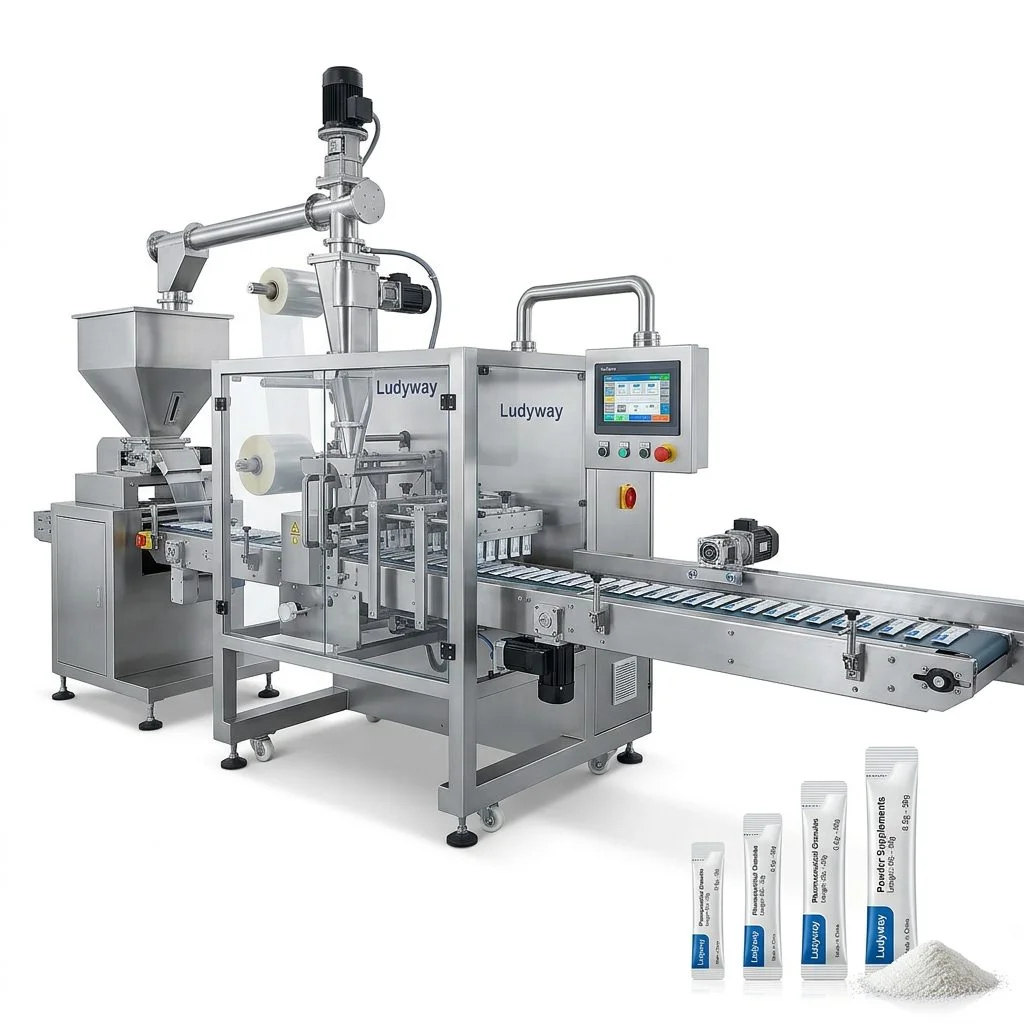
Single-dose packaging used to be a niche format, common in pharmaceuticals and hotel condiments. Today it is a mainstream choice for supplements, drink mixes, sweeteners, skincare, and pet health products. As demand grows, more manufacturers are asking how to produce these formats at scale without sacrificing consistency or margins. Increasingly, the answer is investing in high-output packaging capacity.
What Is Driving Demand for Single-Dose Formats
Convenience has become a purchasing factor
Consumers now expect products that fit into busy routines. A pre-measured sachet of electrolyte powder or greens mix removes the scoop, the measuring, and the mess. It slips into a gym bag, a purse, or a desk drawer. For many shoppers, that ease of use is enough to tip a buying decision, especially in categories where competing products are otherwise similar.
Portion control supports health and wellness goals
Pre-measured servings take the guesswork out of dosing. That matters for supplements, where consistency is part of the value proposition, and for consumers tracking sugar, caffeine, or calorie intake. Brands also benefit: a fixed dose reduces customer complaints about taste or strength that come from inconsistent scooping.
Trial sizes and travel-friendly packs lower barriers to purchase
Single-serve packs give customers a low-risk way to test a new flavor or brand. A box of five sachets costs far less than a full canister, which makes it easier to convert curious shoppers into repeat buyers. Travel retail and e-commerce sampling programs also rely heavily on compact formats that are light, flat, and cheap to ship.
Why Output Capacity Has Become a Strategic Question
Growing order volumes expose bottlenecks
Many brands begin with small production runs, using semi-automatic equipment or contract packers. As sales grow, however, the packaging step often becomes the constraint. If filling and sealing cannot keep pace with demand, the result is missed retail deadlines, stockouts, and higher overtime costs.
Higher throughput lowers cost per unit
Single-dose products are packaged in very small quantities, so unit economics depend heavily on speed and uptime. Even modest gains in output per hour can translate into meaningful savings across millions of units a year. Labor, utilities, and floor space are spread across more finished packs, which improves overall efficiency.
Bringing production in-house offers control
Outsourcing packaging works well early on, but many established manufacturers eventually move it in-house. Doing so gives them tighter control over quality, scheduling, and intellectual property such as proprietary blends. It also shortens lead times when launching new flavors or seasonal variants.
How Multi-Lane Systems Fit Into the Picture
One approach manufacturers use to increase output without expanding their footprint dramatically is the multi-lane format. Instead of producing one stick at a time, this type of equipment runs several parallel lanes side by side, filling and sealing many packs in each cycle. A multi lane stick pack machine is a common choice for companies producing powders, granules, or liquids in large volumes, because it multiplies output while keeping the package format itself small and familiar.
Manufacturers evaluating this route generally focus on business questions rather than engineering details:
- Volume outlook: Does forecasted demand justify the capital investment over a three-to-five-year period?
- Product range: Will the line handle several formulations or only one product?
- Changeover needs: How often will the line switch between flavors or pack sizes, and how much downtime is acceptable?
- Facility fit: Does the plant have the space, utilities, and staffing to support a higher-output line?
Answering these questions early helps avoid buying more capacity than the business can use, or too little to matter.
Industries Leading the Shift
Nutritional supplements and functional beverages
Powdered vitamins, protein blends, collagen, and hydration mixes are among the biggest users of single-dose formats. These products are sold in both retail boxes and subscription programs, where consistent portions and lightweight packaging keep shipping costs manageable.
Food and beverage ingredients
Instant coffee, tea, sweeteners, flavor enhancers, and seasoning blends increasingly appear in single-serve sticks. Foodservice operators like them for portion accuracy and reduced waste, while retail brands use them to create multi-flavor variety packs.
Health, beauty, and pet care
Oral rehydration salts, skincare serums, and pet supplements are also adopting compact single-dose formats. In these categories, hygiene and dose accuracy are especially valued, since a sealed sachet protects the product until the moment of use.
What to Consider Before Investing
High-output packaging is a significant commitment, and the decision deserves a structured review.
Total cost of ownership
The purchase price is only one piece. Manufacturers should account for installation, operator training, maintenance, spare parts, and packaging film costs. A lower-priced line that requires frequent adjustments can end up costing more than a better-suited alternative.
Product characteristics
Powders differ widely in how they flow, clump, or absorb moisture. Liquids and pastes raise their own considerations. Running trials with actual product before purchasing is a practical way to confirm that a line will perform as expected.
Quality and compliance
Whether the product is a food, supplement, or personal care item, packaging must meet relevant regulatory and quality standards. Accurate dosing, reliable seals, and clear lot coding all support traceability and reduce the risk of recalls.
Sustainability expectations
Retailers and consumers are paying closer attention to packaging waste. Single-dose formats use less material per serving than many rigid containers, but recyclability of the film remains a concern. Manufacturers should track developments in mono-material films and factor them into long-term planning.
The Bigger Picture
The move toward high-output single-dose packaging reflects a broader shift in how products are designed, sold, and used. Consumers want convenience and precision, retailers want compact, shippable formats, and manufacturers want predictable costs at scale. Companies that align their packaging capacity with these expectations are better positioned to launch new products quickly and respond to shifts in demand.
For manufacturers weighing the decision, the most useful starting point is a clear picture of current and projected volumes, product variety, and quality requirements. With that in hand, choosing between outsourcing, incremental upgrades, or a larger investment becomes a much more grounded business conversation.
COMTEX_493562474/2891/2026-09-30T07:21:47
Serious News for Serious Traders! Try StreetInsider.com Premium Free!
You May Also Be Interested In
- In September, Mortgage Rates Averaged Highest Level Since 2025 at 7.03% — But Bankrate Consumers Averaged 6.32%
- OptionMetrics Launches IvyDB TradeFlow, Giving Institutions Insights on Buying and Selling Order Flow, Retail Trading Behavior, Participation in 0DTE Options Trading
- Lucen Software Announces General Availability of Lucen Flowchart, an AI-Assisted, PowerPoint-Native Flowchart Builder and Editor
Create E-mail Alert Related Categories
Globe PR Wire, Press ReleasesSign up for StreetInsider Free!
Receive full access to all new and archived articles, unlimited portfolio tracking, e-mail alerts, custom newswires and RSS feeds - and more!
