



SkyDrive Reaches 100km/h Milestone
 Tweet
Tweet Share
Share E-mail
Data from Stable High-Speed Flight Supports Design Validity and Progress Towards Certification and Commercialization
TOYOTA, Japan--(BUSINESS WIRE)-- SkyDrive Inc. (“SkyDrive”), a leading Compact eVTOL (*1) aircraft developer based in Japan, has successfully accelerated its SKYDRIVE aircraft (SkyDrive Model SD-05) to a speed of 100km/h, a viable speed for the commercialization of short hop inter-urban air mobility. Through a series of high speed tests, SkyDrive has verified the aircraft’s high-speed stability, controllability, and maneuverability, as well as the performance of the propulsion systems, flight control systems and on-board avionic equipment.
This press release features multimedia. View the full release here: https://www.businesswire.com/news/home/20260623090633/en/
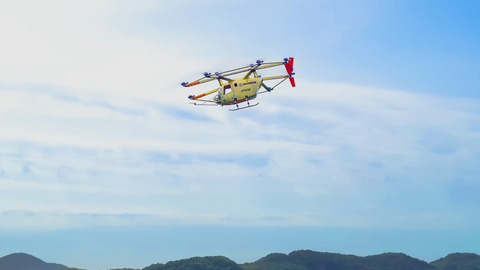
The data gathered through the high-speed flight test campaign allows SkyDrive’s engineers to confirm the accuracy of the aircraft characteristics and dynamic behavior predicted in advance of actual aircraft testing through advanced design and analysis, marking another major step towards type certification and the planned commercialization of the aircraft in 2028.
YouTube: https://youtu.be/EOOnQQZqq9I
The Significance of Reaching 100km/h
SkyDrive is pleased to announce this high-speed milestone. However, the significance of achieving stable flight at 100km/h goes beyond simply reaching a certain number on the airspeed indicator.
Aircraft development begins with design and analysis, proceeds through individual system tests and ground tests, and then moves on to the manufacture of a full-scale aircraft and flight testing. At the same time, simulators are used to repeatedly verify flight characteristics, propulsion systems, and flight control systems.
Simulation, analysis and ground testing are all key parts of the process, but the final flight testing stage is critical. There are some things that cannot be known until the aircraft actually flies. This is particularly true of high-speed flight, where aerodynamic forces, vibrations, structural loads, and flight control system response all change and interact in complex ways. Flight testing is the only way to verify whether the results predicted during the design phase accurately describe the aircraft’s in-flight behavior.
As SkyDrive’s aircraft is based on a completely new concept, distinct from conventional fixed-wing aircraft and helicopters, we cannot assume that existing knowledge and flight data will apply. Every new aircraft needs to collect and verify data through actual flight tests, but with a new aircraft concept, this phase becomes even more indispensable.
The Benefits of Reaching 100km/h with our Multicopter
1. Achievement of Important Technical Milestones
During high-speed flight, aerodynamic forces, vibrations, structural loads, propulsion systems and flight control all change significantly, as do the interactions between them. High speed testing is a critical stage of aircraft development as it allows us to confirm the appropriateness of our design and the precision of our prior analyses.
Flight testing also frequently reveals new challenges. If the data from actual flight testing differs significantly from the data assumed at the design and analysis stage, it can result in the need for additional testing, design changes, and even the revision of existing development plans.
Our current flight test campaign has allowed us to confirm the stability, controllability and structural integrity of the aircraft, as well as the functionality of the aircraft’s various systems. The results show that the observed flight characteristics and behavior match our expectations from the design and analysis phase.
SkyDrive is pleased to have achieved high speed forward flight, overcoming the difficulties of reaching this stage and demonstrating the appropriateness of our design, analysis and testing assumptions. We are now able to move our development forward toward the certification and commercialization of our aircraft with a higher degree of visibility and predictability.
2. Confirming the Ability of a Compact Multicopter to Enable Urban Air Mobility
The recent high speed forward flight tests conducted by SkyDrive demonstrate the utility of the compact multicopter concept that SkyDrive has pursued since the company’s founding.
SkyDrive’s multicopter design, which eschews fixed wings, is optimized for use in urban airspaces. A compact design not only allows for wider flexibility in takeoff and landing locations, it also keeps the aircraft structure and operations as simple as possible, reducing operational costs and improving maintainability.
The compact multicopter design represents a revolution in aviation. However, while the new design brings many benefits, it also means that the aircraft testing cannot rely on the past data collected from existing commercial aircraft models. This makes it particularly important for SkyDrive to show that its aircraft can fly safely at the speeds required for commercial operations and also that the compact multicopter design is truly feasible for urban airspace use.
Through these recent high speed tests, SkyDrive has confirmed that our aircraft architecture, which uses 12 independent rotors under the control of a central flight control system, functions as designed in high speed forward flight, a confirmation that further underscores the feasibility of using the aircraft for short-hop urban flights.
100km/h is not just a number. It is an important step towards the establishment of multicopters as a new and efficient means of urban transport.
How SkyDrive Achieved Successful High Speed Flight Testing
The successful achievement of 100km/h flight is the culmination of a long process. The capacity to conduct safe and stable high speed flight is built on simulations, wind tunnel tests, ground tests, and various system tests, all of which are required to acquire know-how and data on the aircraft’s flight characteristics.
SkyDrive has conducted:
- An extensive range of flight testing: Our development experience dates back to our SD-03 prototype. Since then, we have accumulated hundreds of test flights.
- Wide-ranging test program: Outside flight testing, our test program also includes standalone testing of our batteries, motors, and rotors, aerodynamic performance testing in the wind tunnel at JAXA (the Japanese space agency), and ground vibration testing.
- Step-by-step flight control tuning: The real time data collected from low- and mid-speed flights is used by our engineers and pilots to take cautious decisions at each stage of the flight test campaign on whether to proceed with faster, expanded flight profiles.
Future Developments
Around the world, many companies are developing eVTOL aircraft. The industry is currently moving beyond the phase of demonstrating that such aircraft can actually fly and into a more advanced phase of gathering the evidence required to show that the aircraft can operate stably at high speed, collecting the data required by regulatory authorities for certification, and demonstrating the viability of future commercial operations.
SkyDrive’s will continue with high speed testing to expand the aircraft’s flight envelope at the speeds required for commercial operation, collect further data and know-how, and clarify that the flight performance of the aircraft continues to match the performance expectations predicted during the design and analysis phase.
Our journey towards certification and the start of commercial operations in 2028 continues.
About SkyDrive Inc.
SkyDrive is a Japanese compact eVTOL company aiming “to take the lead in the once-in-a-century mobility revolution”. The company began testing eVTOL prototypes in 2014 prior to official incorporation in 2018. Under its future vision for urban transportation, flying in eVTOLs will become a regular part of city life. In 2019, SkyDrive became the first company to fly a crewed eVTOL in Japan. In 2025, the company successfully showcased the eVTOL "SKYDRIVE", the company’s first eVTOL product, with demonstration flights at the Osaka Expo witnessed by thousands of visitors over a one-month period. SkyDrive began production of “SKYDRIVE” in March 2024 at a plant owned by Suzuki Motor Corporation, SkyDrive's official production partner. SkyDrive has been working with civil aviation authorities in Japan and the US to obtain certification for “SKYDRIVE”, with the aim of launching the aircraft into service in 2028. SkyDrive is headquartered in Toyota, Aichi Prefecture, and led by CEO Tomohiro Fukuzawa, an engineer and entrepreneur.
For more information, please visit: https://skydrive.co.jp/en/
Editor’s Note:
(*1) “eVTOL” is an abbreviation for electric Vertical Takeoff and Landing. As the name suggests, eVTOL aircraft can take off and land without a runway. eVTOLs are powered by electricity and incorporate advanced, automatic, flight control technology.
Certification related press releases
SkyDrive Reaches Agreement with Japan’s Civil Aviation Authority on its General Certification Plan, a Core Element of the Type Certification Process
https://skydrive.co.jp/en/archives/17834
SkyDrive Becomes Japan’s First eVTOL Developer to Earn “Approved Design Organization” (ADO) Certification
https://skydrive.co.jp/en/archives/18082
View source version on businesswire.com: https://www.businesswire.com/news/home/20260623090633/en/
Kaori Saito
Public Relations
SkyDrive Inc.
Email: [email protected]
https://skydrive.co.jp/en/contact
Source: SkyDrive Inc.
Serious News for Serious Traders! Try StreetInsider.com Premium Free!
You May Also Be Interested In
- EdgeConneX Joins Singapore’s Sustainable Tropical Data Centre Testbed 2.0 as Top-Tier Anchor Partner
- Dorsett – Your Rewards Introduces "Perfect 10": Every Stay Counts, Every Tenth Night Rewards
- Avetta Partners with Epigroup, Unimarket and Wakata to Strengthen Work Readiness Across Supply Chains
Create E-mail Alert Related Categories
Business Wire, Press ReleasesRelated Entities
Definitive AgreementSign up for StreetInsider Free!
Receive full access to all new and archived articles, unlimited portfolio tracking, e-mail alerts, custom newswires and RSS feeds - and more!
