




USDA Deregulates The Darling 54 American Chestnut

FREE Breaking News Alerts from StreetInsider.com!
StreetInsider.com Top Tickers, 10/22/2026
- Nasdaq leads Wall Street gains as SpaceX, Super Micro boost AI sentiment
- Meta beats Q3 estimates, approves new nonvoting share class as AI spending surges
- Tesla stock up as automotive gross margin improves, free cash flow turns positive
- SpaceX, Tesla shares rise after Musk says committees exploring possible merger
- Brent falls as Iran's president discusses mediation with Pakistani army chief
 Tweet
Tweet Share
Share E-mail
The Historic Decision Moves America's Iconic Tree Closer To Forest-Scale Restoration
MCGRAW, NY / ACCESS Newswire / August 31, 2026 / SilvaBio is proud to announce that the U.S. Department of Agriculture's (USDA) Animal and Plant Health Inspection Service (APHIS) have formally deregulated the Darling 54 American chestnut-a landmark achievement in a decades-long effort to restore this species to its 25-state native range.
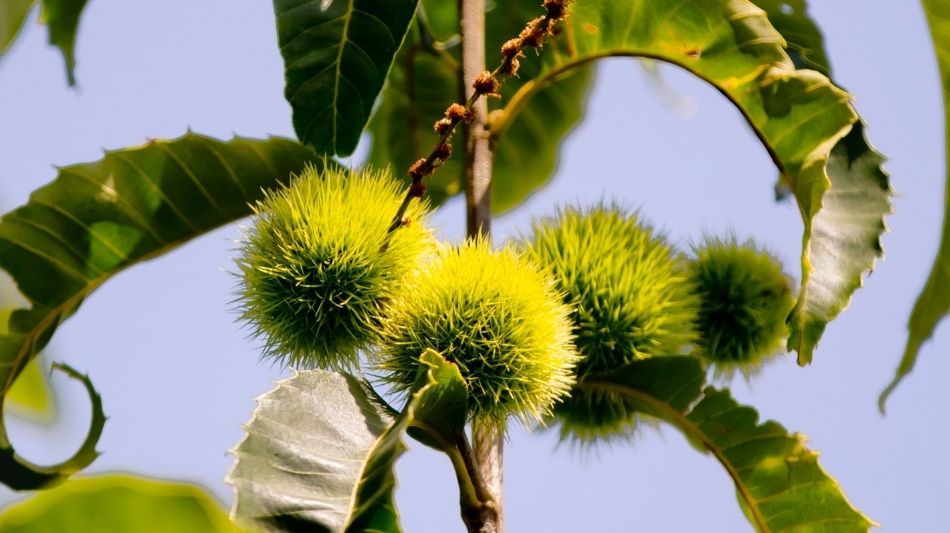
Following a thorough, multi-year review process, the agency has determined that the modified American chestnut developed at the SUNY College of Environmental Science and Forestry (ESF) is "unlikely to pose a greater plant pest risk than the unmodified comparator" and therefore is no longer subject to USDA-APHIS regulation. This determination draws on the information and data ESF submitted in its petition for deregulation, available scientific data, and public comment gathered through two Federal Register notices: the November 10, 2022 notice announcing the draft plant pest risk assessment (PPRA), and the June 6, 2025 notice announcing the revised petition and revised draft PPRA. Additional reviews currently in progress by the Environmental Protection Agency (EPA) are needed before widespread distribution can take place, but this first approval is a significant milestone.
This announcement marks a critical juncture in the regulatory process of this genetically engineered tree, propelled by scientific advances in service of safeguarding America's natural legacies. Notably, the news arrives in the nation's 250th year, on the heels of the National Park Service and U.S. Forest Service planting of two Darling 54 chestnuts on the Ellipse (President's Park) in Washington, D.C.-a poignant demonstration of American innovation, conservation, and cross-sector collaboration.
"Today's decision is monumental, not just for the American chestnut, but for what's possible when rigorous science and thoughtful policy move forward together," said Andrew Serazin, Co-Founder and Chairman of SilvaBio. "The USDA determination reflects years of rigorous research and a regulatory process grounded in the shared commitment of federal agencies, conservation partners, and scientists to reverse one of the greatest ecological losses of our time. For forest biotechnology, it's proof of concept, a testament to what American science and conservation can achieve together."
"This is the moment the restoration of the American chestnut begins to move from possibility to scale," said Michael Bloom, Co-Founder and CEO of SilvaBio. "USDA deregulation opens a new chapter for this iconic American tree. We can soon begin expanding beyond controlled USDA-approved orchards toward larger plantings across the chestnut's native range. We've spent years building the science, production capacity, and partnerships to make this possible. There is important regulatory work ahead, but we now have a path from thousands of trees today to millions over time."
"Our research team at ESF has spent decades developing procedures to create and evaluate these trees, so it's very exciting to reach this milestone of the first agency approval," said Dr. Andrew Newhouse, Ph.D., director of the chestnut research program at ESF. "This decision offers hope not only for the American chestnut, but also for the use of biotechnology to address many other threats to the native plants that are critical to our ecosystems and livelihoods."
The American chestnut was once among the most abundant and valuable trees in North America, accounting for as much as a quarter of the forest canopy in some regions. In the early 1900s, a fungal blight wiped out an estimated 4 billion trees, rendering the species functionally extinct and fundamentally altering forest ecosystems, wildlife habitats, and the rural economies it supported.
More than a century on, the American chestnut could now become the first tree species ever returned from functional extinction-made possible by advances in blight-tolerant breeding. SilvaBio's work builds upon the pioneering technology of the Darling 54, developed by its research partners at ESF. Blight tolerance of the line has been rigorously tested and confirmed by independent studies conducted at ESF, the University of New England, and Purdue University.
SilvaBio continues to advance restoration by moving the Darling line from the lab to real-world deployment. Using genomic prediction, accelerated "lightspeed" breeding, and advanced micropropagation, the company is developing a broad portfolio of American chestnut genetics designed to maximize diversity, adaptability, and long-term resilience. These capabilities enable earlier selection of disease-tolerant trees, compress breeding timelines, and support large-scale production needed for meaningful restoration.
To learn more about the Darling 54 American chestnut restoration project, please visit https://www.restorechestnut.org/.
###
About SilvaBio
SilvaBio is the leading forest biotechnology company. U.S. forests contribute over $350 billion annually and absorb nearly 15% of national carbon emissions. Invasive diseases are outpacing traditional countermeasures, putting these vital systems at risk. We combine genomic prediction, accelerated breeding, and advanced propagation, to compress a decade-long breeding cycle to a single year. Our lead product focuses on bringing the American chestnut back from functional extinction. Our multi-species platform also extends to oak, ash, elm, and other at-risk hardwoods. Better trees, faster.
As a Public Benefit Company committed to responsible reforestation, SilvaBio works closely with researchers at and partners across participating institutions to strengthen the ecosystems and economies these forests support. To learn more, please visit www.silvabio.com.
Media Contact:
Sheila Smith,
Communications Director, SilvaBio
[email protected]
About SUNY College of Environmental Science and Forestry
The SUNY College of Environmental Science and Forestry (ESF) is dedicated to the study of the environment, developing renewable technologies, and building a sustainable and resilient future through design, policy, and management of the environment and natural resources. Members of the College community share a passion for protecting the health of the planet and a deep commitment to the rigorous application of science to improve the way humans interact with the world. The College offers academic programs ranging from the associate of applied science to the Doctor of Philosophy. ESF students live, study and do research on the main campus in Syracuse, N.Y., and on 25,000 acres of field stations in a variety of ecosystems across the state. To learn more, please visit https://www.esf.edu/chestnut/
SOURCE: SilvaBio
View the original press release on ACCESS Newswire
Serious News for Serious Traders! Try StreetInsider.com Premium Free!
You May Also Be Interested In
- U.S. signs Lockheed Martin deal for minimum of 850 F-35 jets
- Dow (DOW) Tops Q3 EPS by 10c, Beats on Revenue
- Allegion plc (ALLE) Tops Q3 EPS by 10c ; Offers Guidance
Create E-mail Alert Related Categories
ACCESS Newswire, Press ReleasesRelated Entities
Maynard Um, Mark Zuckerberg, ARKSign up for StreetInsider Free!
Receive full access to all new and archived articles, unlimited portfolio tracking, e-mail alerts, custom newswires and RSS feeds - and more!
